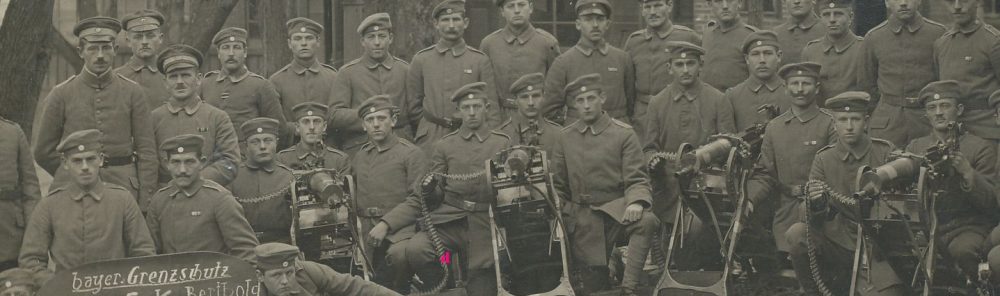
Roger Scruton somewhere listed clothing as one of the essential characteristics of a nation (along, I think, with food and weather). As we’ve had a fairly Novembral May here in Europe I’ve had ample cause to break out cardigans and tank tops and tweed. I rejoice at pictures such as the above. There is the aesthetic sensibility of colour and fabrics, here a rather bold but pleasing assemblage of matter; there are the wooden buttons when plastic would be so much easier to manufacture & replace; and the almost tangible warmth of the texture and striation. It is a wholly human creation.
Last night, as I was thinking of turning in I saw two notification bells on my Youtube account. I checked and found one from Millennial Woe and one from Praying Medic, to the effect that if their channels are banned they have backups elsewhere. What the fuck? thought I. Then Woes was streaming
so I got to bed an hour later than planned.
Varg, The Great Order and some other channels were outright deleted, others totally demonetized. I was puzzled by the choices. Varg had a fairly large channel and spent a lot of his time attacking other pro-white Youtubers for e.g. taking donations (Survive the Jive), having dark hair (Woes), having a Youtube channel and not pumping out babies (Lauren Southern), liking cathedrals (The Golden One), and in the remaining time made interesting videos about gardening, raising children, black metal, weapons, and rather Uncle Ted-esque observations about Western civilisation and its effects upon us and our environment. The Great Order’s channel was much smaller and a mix of streams and poetry readings & philosophy. Why these two and not others?
Putting aside the often incoherent and senseless nature of Cabal oppression, I suspect these were test cases, that The Great Order and Varg were chosen as representative of certain Youtube demographics, and the enemy will be closely observing the fallout. After they have an idea of the likely response, they will hit other pagan pro-white channels (Varg) and other streaming pro-white channels (The Great Order).
Of course, the targeted will simply shift to Bitchute and other platforms. But I think the point isn’t to utterly stamp dissident thought out; it is to segregate it from the normies. Part of the fun of Twitter was watching Woes, Stefan Molyneux and others bantering with normies and Leftist scum. If everyone to the right of the Clintons moves to Gab and Bitchute, the normies can safely inhabit their snugs and ignore dissenting opinions. The medium-range aim, I think, is to segregate the Right from the Left.
While the Right enjoy observing and criticising the Left, indeed this is the backbone of e.g. Sargon of Akkad’s channel, the Left prefer to avoid even noticing the genuine Right. The prefer to concoct a boogeyman of KKK and Nazi imagery and project the resulting mess onto anyone who doesn’t want European culture & peoples to be utterly exterminated. They don’t want to actually talk to e.g Vox Day or Millennial Woes; because then they might think, “he’s really quite nice! and he does have a point…”
Why do most people, especially Germans, trust the mainstream media? I think in part it’s that, to question the accepted narrative, you have to be an outsider of some sort – perhaps why so many in the Alt-Right and even -Lite are homosexual or, as in the case of Milo, homosexual and Jewish and married to a negro. And since Germanic peoples create orderly societies, pretty much the only disorder and violence in such nations due to 3rd-World migrants, most people trust the chaimstream narrative and have no real pressing urge to question whatever garbage they are fed by State-funded TV and newspapers.
Another reason occurred to me while reading David Mitchell’s Cloud Atlas. In one section, a 1970s journalist talks about the Watergate reporters in mythic and hallowed terms, as fearless crusaders against evil, instead of being most likely Mockingbird plants. Since everything we hear about the media, about journalists, comes from the media, it’s unsurprising people think of the newspapers as apolitical bastions of integrity and virtue, rather than Deep State propaganda organs. How exactly would people think about e.g. the Halifax Bank if they only heard about it through Halifax Bank press releases? If they had problems with internet banking, their credit, or with surly staff, they would think it must be only their problem, that everyone else is highly satisfied. And if they knew others in the same boat, they would probably think themselves a statistically meaningless outlier.
And so with the media. I was talking to some German automotive lawyers and they said every single article written about autonomous driving was full of basic errors, even in the most prestigious of publications; and yet they continued to believe everything else in the pages of Der Spiegel and the Süddeutsche Zeitung. They were convinced Donald Trump was an ignorant and retarded buffoon despite him being a self-made billionaire and occupying the most powerful political office on the planet. For them, this could all be hand-waved away – for Der Spiegel told them that in America a moronic clown can easily become a billionaire and President – because, after all, America is not like Germany.
Germany, in short, is a good nation for men like Claas Relotius.
A film in the vein of Rush, with two antagonistic and, in terms of character, contrasting athletes, John McEnroe and Björn Borg. Shia laBeouf and Sverrir Gudnason are both excellent, with a similar hardened, explosive intensity – the difference being that Gudnason’s Borg seems to explode at some almost undetectable depth of the soul, his impassive Pewdiepie-esque face only occasionally and very faintly registering some kind of internal panic or fury. LaBeouf’s McEnroe is a small, nervous ball of anger (McEnroe is noticeably taller in real life, apparently the same height as Borg – 180 cm). They’re both oddly charismatic.
I especially enjoyed, as in Rush, the post-match accidental meeting of the two men (Borg won). They’re waiting in the airport, Borg spots McEnroe from afar and looks uncertain if he should say anything,
McEnroe however sees him
and immediately walks over, so Borg comes out to meet him
and they have a typically masculine conversation:
McEnroe: Congratulations.
Borg: Thank you.
McEnroe: Yeah. Good match.
Borg: Thought you had me.
McEnroe: Almost, yeah.
There is a taciturn ease here. Borg’s girlfriend is in the background, looking unsure as the men chat and then exchange a hug (in real life, they apparently became good friends after the match).
I enjoyed this film, and Rush, because they demonstrate a feature of male relationships – competition and friendship. In the West, competition is often seen as somehow shameful, because someone has to lose. I knew a homosexual Boomer once who used the word “competition” as synonymous with “aggression” and hated all sports because there are winners and losers. An ex-professor at my university, he said that all students should automatically get a 2:1 just for turning up, and if you want to do the exam you then get a 1st, automatically. It’s very modern thinking and would have struck pretty much every human being who has ever lived as evidently childish, impractical, almost insane thinking.
It’s also a very female view of things. It’s not that women aren’t naturally competitive – they clearly are; but whereas for men competition is a means of establishing the (fluid) hierarchy and getting to know the capabilities and weaknesses of your fellows in order to have an ease and friendliness together, for women it’s more about crushing potential foes. For women, competition is aggression and violence. For men, competition is a modulation of friendship – every competitor is a potential friend, because you get to know people through a certain rough play and jostling, and once you know someone you can be friends.
Thus, women often remark on how aggressive men are, not understanding that it’s not really aggression with the intent of destroying or damaging the adversary; it’s more a testing of boundaries, and what women often mistake for abuse is merely a friendly jest.
Women are inherently averse to risk – there is probably a link between testosterone and the adrenaline release of risk-taking. Thus, women are only confrontational and competitive when they are sure they will win. Women do not understand the concept of the heroic defeat (Thermopylae, The Battle of Maldon, etc.) because a woman would only fight if she was absolutely assured of victory to begin with – and then she would be relentless and vicious. A man would fight to preserve his standing, his sense of himself as a man capable of projecting force in a world of forces & wills – and a man would be more likely to accept a defeated foe’s surrender with good grace. A women would execute or at least enslave the white-flag-waving enemy, because for a woman the whole point of competition is to subjugate and destroy.
As is often the way, fear leads to misprision and violence; strength makes for understanding and peace.
It seems human nature to observe and then follow the consensus. Women, especially, are tribal conformist creatures, as multiple studies and the experience of the ages have demonstrated. I’ve lost track of how many German cows I’ve seen with a dreadful Louis Vuitton bag on the train:
– women especially don’t acquire things because of any inherent value, but because women like Meghan Markle have one, and they want to be just like her. It is natural, then, that the Government would create a “we fear reprisals against the Muslim community!” narrative; because if the NPCs see it on TV, they will parrot “the worst thing about this Truck of Peace attack is that innocent Muslims will certainly be targeted by the far-right. Nigel Farage, who is a racist, is probably stabbing innocent Muslim babies.”
It is effective. However, since it is not even remotely true, the natural human tendency to notice patterns (e.g. that most crime is committed by dark-skinned immigrants or children thereof) will lead to a certain cognitive dissonance. When a NPC begins to question the fabricated consensus, because it is so unified & internally coherent, it will collapse all at once in his mind. And then he will most likely go to the other extreme.
Just as killing off Christianity was never going to kill off religion – people will believe in something – killing off national identity is not going to kill off identity. The decimation of mainstream Christianity has resulted in a fragmentation of the religious space, with all sorts of beliefs rushing in to fill the void. The decline of national identity and the subsequent war on white people is creating room for tribalism to flourish. In this regard, civic nationalism is a rearguard action. It’s why it is popular with old people.
I’ve recently encountered several real life examples of the Boomer meme. There is something rather special about Western Europeans, especially German women, who grew up in peace & prosperity, told that their parents & grandparents were monsters and the Jews are sacred angels – they inhabit a kind of blissful utopia of the mind, where we can all get along provided we disown our ancestors and our traditions and put white people at the bottom of the entire universe.
One of their favourite arguments for the ghastly EU is that if we don’t have a totalitarian superstate controlling everyone on the planet, we’ll go back to the 1930s and have nations fighting wars because that is what nations do. It is true that nations in the USSR didn’t wage war on each other; wars were rather conducted by the centre against recalcitrant appendages such as Hungary in 1956. So, a totalitarian superstate would, in a sense, be preferable to a world of competing nations.
There is some truth here. As long as you have distinct groups, they will fight & compete, much as children naturally squabble. My response would be: competition, even to the point of war, is inevitable, and totalitarian attempts to quash dissent are not preferable to an intelligent, nuanced working-out of grievance and strife. And if you want to say nations lead to war and therefore we should have no nations, you could also say the Mafia is founded on family and therefore we should have no family, or that fruits can become alcohol and alcohol can kill people, so we should therefore eradicate fruit.
But it is very much a generational malaise. The younger generations, who will grow up with racial conflict and daily violence, will regard the Boomers with amazed disdain and contempt.
It used to be that an intellectual mastered a subject in order to build on it. The point of his labor was not to prove he had read everyone in the field. The point was to find the gaps in his field and use the source material as a foundation for filling some of those gaps. In other words, the academic added to his field, rather than maintained it like a curator of a museum.
This shift from speculation to memorization reflects the shift in the culture, not just the education system. As a managerial system came to dominate the upper reaches of society, the education system became an exam system. You pass through the system in order to accumulate credentials that open doors within the managerial elite. The system began to select against people who question the current order. Instead, the system selects for those most likely to support and defend the system.
There is also the question of what to memorize. It is one thing to have a folder full of citations (c.f. Fowler et al. p344-6) to brandish like a porcupine’s quills or peacock’s tail; it is another to have a well-stocked memory of Western literature. At my (reputable) alma mater I found academics oddly uninterested in anything that couldn’t be ground into mincemeat for their latest research paper; and given the nature of academic publishing, that meant their interests were exceedingly narrow. One of my tutors specialised in modernism & post-modernism and hadn’t read Chaucer; another specialised in Milton and hadn’t read Dante.
The modern academic is a special form of ignoramus, stuffed with largely useless knowledge (e.g. the last decade of “research” into his topic). He cannot discern; cannot order; cannot think. To know what to memorise and why, to be able to transform information into knowledge, is to be old-fashioned, aberrant.
Until about 2015 I felt that Western civilisation would inevitably collapse, over about two to three generations, and if one could go forwards to 2050-or-so, everything from California to Berlin would look like Mogadishu. But to quote Hölderlin:
Wo aber Gefahr ist, wächst
Das Rettende auch
(salvation flourishes where there is danger, my loose translation)
So, as the globohomo, through Merkel et al. decided to terminate Western civilisation in a short time frame, reality itself responded in the form of e.g. The God Emperor, blessings be upon him.
Q and Trump have both signalled that the Cabal’s takeover of America (and the world) cannot be allowed to happen again. Since it seems the Storm is even now breaking, it is worth thinking, How could one Cabal-proof any system?
I can think of two useful means:
1. Foster what Anonymous Conservative calls “the myth”: of patriotism, public service, integrity.
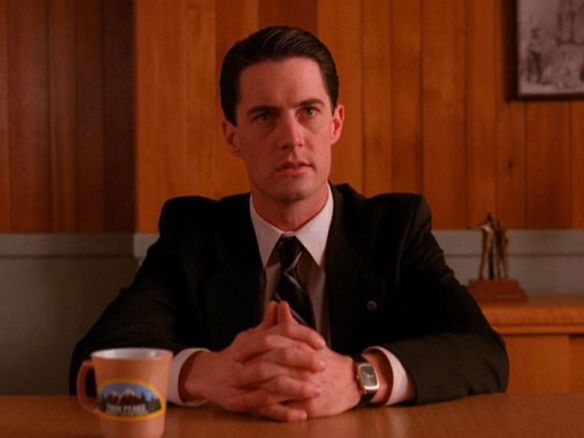
If people think of the FBI as full of Agent Dale Coopers and Gordon Coles – upright, incorruptible men of law & order – then most recruits should be attracted to such ideals. While there will always be psychopaths and bullies, and the merely weak and corruptible, if most recruits are initially believers in “the myth”, the organisation will most likely retain a subterranean possibility of goodness, in spite of corruption.
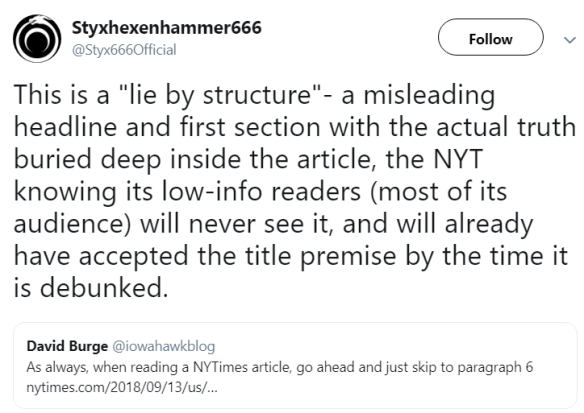
2. Teach all schoolchildren how to analyse the news. At my school, aged 12 or so, we had an English class where we compared newspaper articles discussing the same event. The teacher drew attention to the vocabulary, so e.g. one might use “protestors” and the other “angry mob”. At a higher level one could point to what Styxhexenhammer calls “lie by structure”:
Although I was bottom of my class at school, this lesson stuck. I learnt to ask “from where does this report come?” and to look for equivocative and weasely language, for evident rhetoric, unsupported assertions, for contradictions – for basically everything you find in chaimstream media. I learnt to “delouse” as Leary puts it in In The Line of Fire.
This should be taught weekly from, let’s say, age 12. Let the young learn a healthy contempt for journalists.


 Remainders